
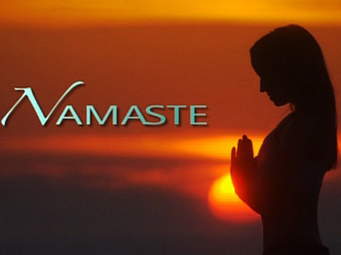
We all have been told to practice social distancing to avoid the spread of Coronavirus. So, no more hugs, cheek to cheek, Hi-Fi, or shaking hands, as for now. Let’s greet each other only with our very own `Namaste’. In fact, the world leaders across the world have already adopted `Namaste’ as a way to greet each other.
A few weeks ago, at a press meet with the Irish Prime minister Leo Varadkar Donald Trump revealed he has been greeting world leaders with a Namaste. He said, “I was in India recently and there I learnt about Namaste. Now, that we can’t shake hands, I have adopted it as a way of greeting. In England too, the Prince of Wales greeted celebrities with a `Namaste’ at the Prince’s Trust awards.
The meaning of Namaste
In India, we often greet each other with a Namaste or Namaskar. It is derived from the Sanskrit Namas (bow or obeisance) + Te means to you. A slight bow and hands pressed together, palms touching and fingers pointing upwards, thumbs close to the chest. This gesture is called Anjali Mudra or Pranamasana. In Hinduism, it means “I bow to the divine in you”. It may also be spoken without the gesture
The gesture Namaste represents the belief that there’s a Divine spark within each of us that is located in the heart chakra. To perform Namaste, we place the hands together at the heart chakra, close the eyes, and bow the head. It can also be done by placing the ha
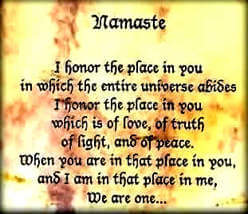
nds together in front of the third eye, bowing the head, and then bringing the hands down to the heart. The gesture is an acknowledgment of the soul in one by the soul in another.
How and where is Namaste used?
In Indian households, children are taught to greet elders with a Namaste. We welcome guests or relatives, or even acknowledge strangers with a Namaste. The gesture is said to express courtesy, politeness, hospitality and gratitude to the other person. It is also a part of the 16 Upacharas that are used during formal worship in a temple or some other religious place. When it comes to worshipping a deity, then Namaste signifies ‘greeting the God’.
Namaste, is also used in various Indian dance forms, in everyday religious rituals and yoga postures. It sends the messages of peace to the universe. It’s all about the positive energy you’ve created with Namaste. Everybody around you can catch” your sense of gratitude and peace when you great them with a Namaste

