
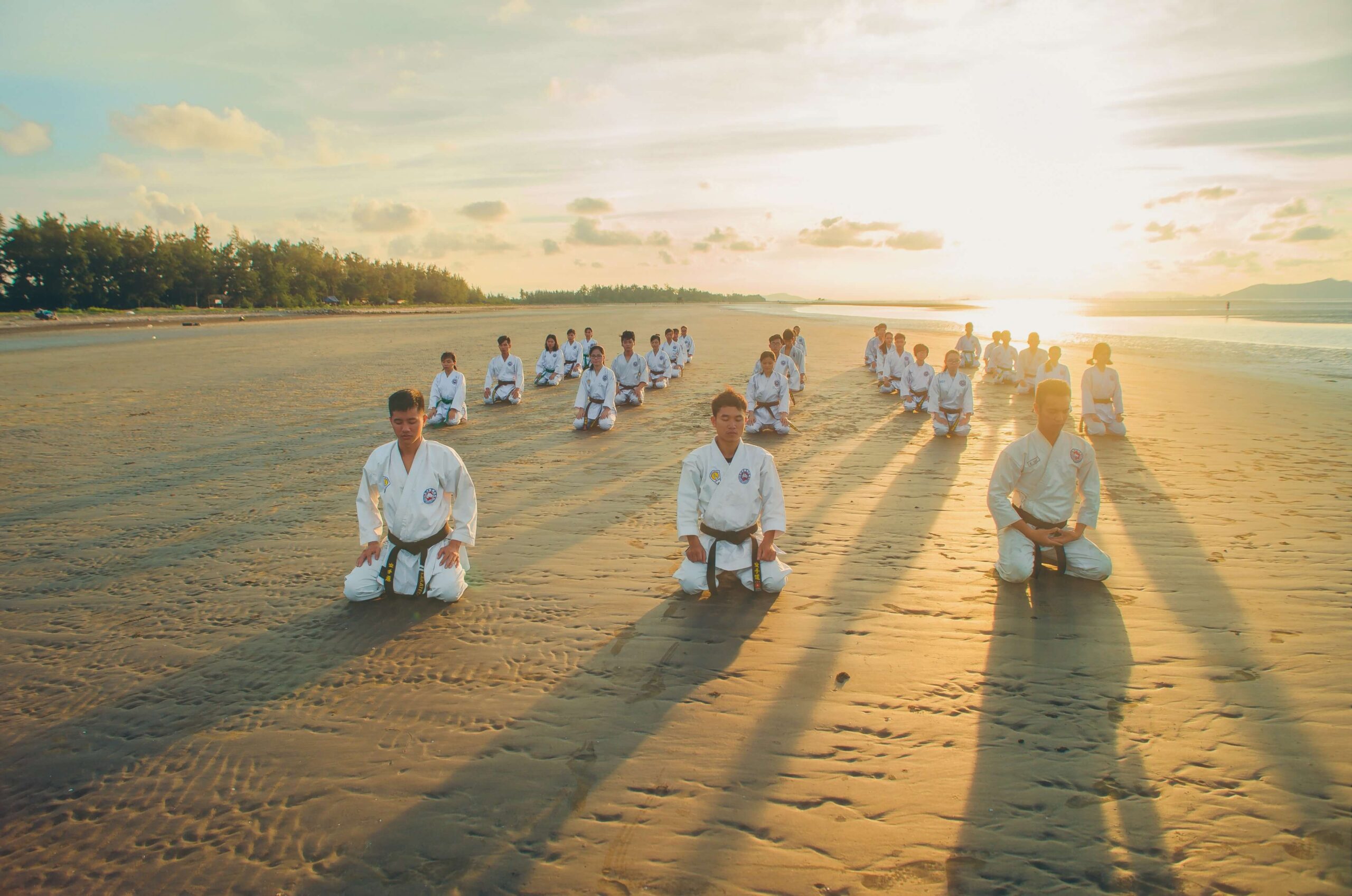
Tai Chi is a form of exercise that began as a Chinese tradition. It’s based in martial arts and involves slow movements and deep breaths. It is often compared to the Indian tradition of Yoga from India. Just like Yoga, Tai Chi with its free flowing movements has many physical and emotional benefits.
There is much more to Tai Chi than one can see, and virtually no one can describe such a complex art in one simple sentence. Yes, it’s aesthetically pleasing, easy and enjoyable to practice. It can be a meditation and an integral exercise for all parts of the body and the mind. It brings tranquility and helps you think more clearly. Tai chi can be many things for different people; regular practice will bring better health and wellness.
The flowing movements of Tai Chi are like water flowing in a river, beneath the tranquil surface there is a current with immense power—the power to heal within. With consistent practice, people will be able to feel the internal energy (qi 氣), convert it to internal force (jing) and use it to generate more internal energy.
Along with a more balanced mental state; your fitness, agility and balance will improve. The unique feature of Tai Chi is that it is internal. Internal means building the inner strength from inside out, therefore you can continue to develop at any age.
More about Tai Chi
Tai Chi improves muscular strength, flexibility, fitness, immunity, relieves pain and improves quality of life. Muscle strength is important for supporting and protecting joints and is essential for normal physical function. Flexibility exercises enable people to move more easily, and facilitate circulation of body fluid and blood, which enhance healing. Fitness is important for overall functioning of the heart, lungs, and muscles. In addition to these components, tai chi movements emphasize weight transference to improve balance and prevent falls.
Aside from the health benefits, tai chi runs deep and strong. It’s easy to learn and becomes a way of life for many practitioners. Yet, because of its depth, no one ever knows it all, and thereby lies the fascination and the never-ending challenge of the art.
There will be a brief moment when a practitioner will enter a mental stage of tranquillity, moving to a different world, time, and space, a world where there is no schedule, no hustle and bustle. Yet the person still feels very much a part of the world. In a non-religious sense, it’s a spiritual experience. Such an experience is so satisfying that it is beyond words.
Structural integration. Tai chi looks at the body as an interconnected system, not as a collection of individual parts. As a result, when practicing Tai Chi, you won’t do one exercise for your biceps and another for your glutes. Instead, tai chi integrates the upper body with the lower body, the right side with the left side, and the extremities with the core.
Alignment and posture are part of this structural integration, and tai chi trains you to find alignments that are safe and unstrained, allowing you to perform graceful movements. You move more efficiently—not just during your tai chi practice, but throughout your day. The result is less stress and load on your joints and better balance.
Improved posture provides tai chi benefits that extend well beyond your class. When you walk or sit with your shoulders rounded and your torso hunched over, it is hard to take deep breaths. But when you straighten your back, roll your shoulders back and down, and open your chest, you breathe more deeply and efficiently.
Not only does this integration improve your ability to move without pain, but it also affects your mental health. In two different studies, people who sat or walked more upright during the experiments had a more positive outlook afterward than those who slouched while sitting or walking.
Benefits of Tai Chi
Some of the benefits of Tai Chi include decreased anxiety and depression. A few years ago, one study compared the effects of tai chi on stress-related anxiety to traditional exercise. The study included 50 participants. The researchers found that tai chi provided the same benefits for managing stress-related anxiety as exercise. Because tai chi also includes meditation and focused breathing, the researchers noted that tai chi may be superior to other forms of exercise for reducing stress and anxiety. However, a larger-scale study is needed.
Tai Chi is very accessible and lower impact than many other forms of exercise. The researchers found it to be safe and inexpensive, so it may be a good option if you are otherwise healthy and experiencing stress-related anxiety.
Promotes Weight loss
Regularly practicing Tai Chi can result in weight loss. One study tracked changes in weight in a group of adults practicing Tai Chi five times a week for 45 minutes. At the end of the 12 weeks, these adults lost a little over a pound without making any additional lifestyle changes.
Improves Cognition
Tai chi my in older adults with cognitive improvement. . More specifically, tai chi may help improve memory and executive functioning skills like paying attention and carrying out complex tasks.
Improves COPD Symptoms.
Tai chi may improve some of the symptoms of chronic obstructive pulmonary disease (COPD). In a trusted study, people with COPD practiced tai chi for 12 weeks. At the end of the study, they have improvements in their ability to exercise and reported an overall improvement in their quality of life.
Improves balance in people with Parkinson’s disease
In a of 195 participants, regular practice of tai chi was found to decrease the number of falls in people with Parkinson’s disease. Tai chi can also help you to increase leg strength and overall balance.
Is it safe for people with heart disease?
Tai chi is a safe form of moderate exercise you can try if you have heart disease Following a cardiovascular event, regular tai chi practices may help you:
- increase physical activity
- lose weight
- improve your quality of life
Is tai chi safe?
Tai chi is generally considered to be a safe exercise with few side effects. You may experience some aches or pains after practicing tai chi if you’re a beginner. More rigorous forms of tai chi and improper practice of tai chi are associated with increased risk of injury to joints. Especially if you’re new to tai chi, consider attending a class or working with an instructor to reduce your risk of injury.
If you’re pregnant, talk to your healthcare provider before beginning a new exercise program.
How to start tai chi
Tai chi focuses on proper posture and exact movements, something that is difficult to learn on your own. If you’re new to tai chi, take a class or get an instructor.
Tai chi is taught in studios all over the United States and other countries. Larger gyms, like the YMCA, sometimes offer tai chi classes as well.
Choosing a tai chi style
There are five different styles of tai chi, and each style can be modified to suit your goals and personal fitness level. All styles of tai chi incorporate continuous movement from one pose to the next.
- Yang style tai chi focuses on slow, graceful movements and relaxation. Yang style is a good starting point for beginners.
- Wu style tai chi places an emphasis on micro-movements. This style of tai chi is practiced very slowly.
- Chen style tai chi uses both slow and fast movements. This style of tai chi might be difficult for you if you’re new to the practice.
- Sun style tai chi shares a lot of similarities with Chen style. Sun style involves less crouching, kicking, and punching, making it less physically demanding.
- Hao style tai chi is a lesser-known and rarely practiced style. This style of tai chi is defined by a focus on accurate position and internal strength.
How does tai chi differ from yoga?
Tai chi emphasizes fluid movement and has roots in Chinese culture. Yoga focuses on posing and originated in Northern India.
Both tai chi and yoga are forms of exercise that involve meditation and deep breathing, and they have similar benefits, such as:
- relieves stress
- improves mood
- Improves sleep
Tai chi is an exercise that can benefit both healthy adults and adults living with a chronic condition.
The benefits of tai chi include:
- better sleep
- weight loss
- improved mood
- management of chronic conditions
If you’re interested in trying tai chi, an instructor can help you get started. Classes are offered in specialized studios, community centers, and gyms.
Thao Le Hoang

